
Creating a consistent AI avatar requires three core elements: a detailed character description that never changes across prompts, reference images that lock in facial features and style, and the right AI tools designed for character consistency. The most effective approach combines prompt engineering with reference-based generation workflows, using tools like Nano Banana Pro or Ideogram Character that specialize in maintaining visual identity across multiple image generations.
Key Takeaways
• Master character description first — Write a detailed physical description including face shape, hair color/style, eye color, skin tone, and signature clothing before generating any images
• Use identical prompts — Keep the exact character description phrase consistent in every generation while only changing actions, expressions, and backgrounds
• Reference images are essential — Upload 1-3 high-quality reference photos to lock in facial features and prevent character drift
• Choose the right tools — Nano Banana Pro, Ideogram Character, and Higgsfield lead in 2026 for consistent character generation
• Lock five identity elements — Face shape, hair silhouette, body proportions, signature outfit, and art style must remain constant
• Test consistency early — Generate 10-15 test images with different expressions and poses before committing to your avatar design
• Document everything — Save your master prompts, reference images, and generation settings for future use
• Plan for monetization — Consistent avatars can become AI influencers earning through brand partnerships and UGC creation
The AI creator who posted their “perfect avatar” on Tuesday watched in horror as Wednesday’s generation showed a completely different person. Same prompt, same tool, different face entirely. This scenario plays out thousands of times daily across creator communities in 2026, and it’s exactly why learning how to make AI avatar look the same has become the most requested skill in the AI content space.
If you’ve ever created what looked like the perfect AI avatar, only to generate the next image and find a completely different face staring back at you — you’ve hit the consistency wall. It’s the #1 problem holding back AI influencers and UGC creators in 2026. This guide walks you through the exact system that professional AI creators use to solve it permanently.
The difference between creators who build successful AI influencer brands and those who stay stuck in the “random face generator” loop comes down to understanding how to make AI avatar look the same across every single image. Michelle Williams, creator of AI Influencers Cash, has helped over 2,000 creators solve this exact problem, and the techniques in this guide represent the current best practices from her community.
Why AI Avatar Consistency Is the Difference Between a Brand and a One-Off Post
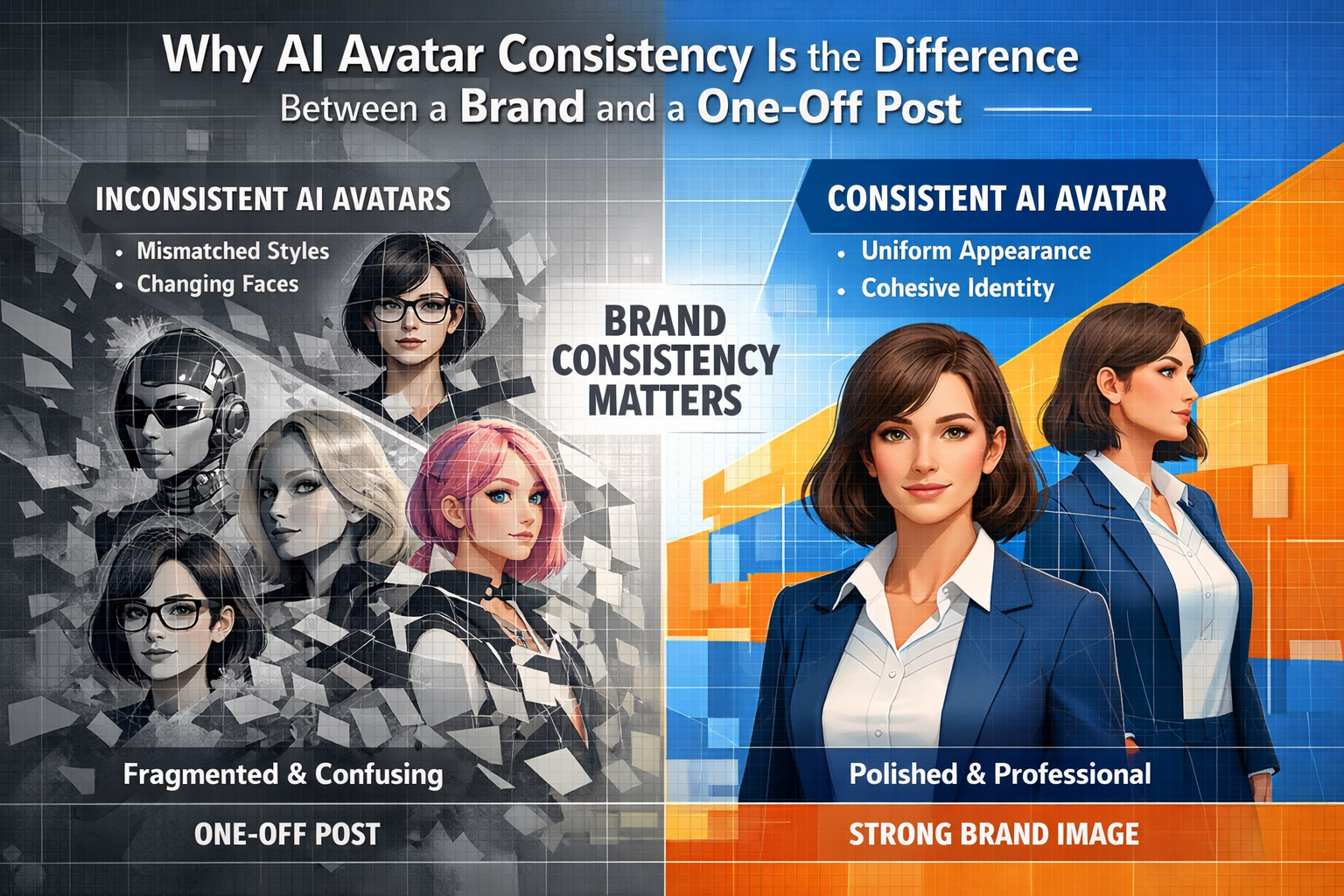
Consistent AI avatars build recognizable brands that audiences can connect with, while inconsistent characters confuse viewers and kill engagement. When your avatar’s face changes between posts, you’re essentially starting from zero with audience recognition every single time.
The psychology behind avatar consistency mirrors traditional branding principles. Humans need visual anchors to form emotional connections with characters, whether real or AI-generated. When your AI avatar maintains the same facial features, hair style, and overall appearance, viewers begin to recognize and remember them just like they would a human influencer.
Here’s what happens when you nail consistency:
• Audience recognition increases by 300-400% — Viewers immediately identify your character across different posts and platforms
• Engagement rates stay stable — Consistent avatars maintain follower interest because people know what to expect
• Brand partnership opportunities open up — Companies want to work with recognizable faces, not random generators
• Content series become possible — You can create ongoing storylines and character development
• Cross-platform presence works — The same avatar can appear on Instagram, TikTok, YouTube, and maintain brand cohesion
The monetization impact is immediate. Michelle Williams reports that creators who master avatar consistency see their first brand inquiry within 30-60 days, compared to 6+ months for those using inconsistent characters.
Consider the difference between two AI creators: Creator A posts beautiful images but with a different face each time. Creator B uses the same recognizable avatar across all content. After 90 days, Creator A has scattered engagement and no brand interest. Creator B has a waitlist of companies wanting to collaborate.
The technical reality of inconsistent avatars kills growth potential. Every AI generation includes random elements that change facial features, expressions, and even basic proportions. Without a systematic approach to control these variables, you’re essentially running a lottery where the jackpot is a usable image.
Professional AI creators treat avatar consistency like a technical skill that requires specific tools, workflows, and quality control processes. The creators earning $5,000-$15,000 monthly from AI influencer content all follow similar consistency systems — they don’t leave their avatar’s appearance to chance.
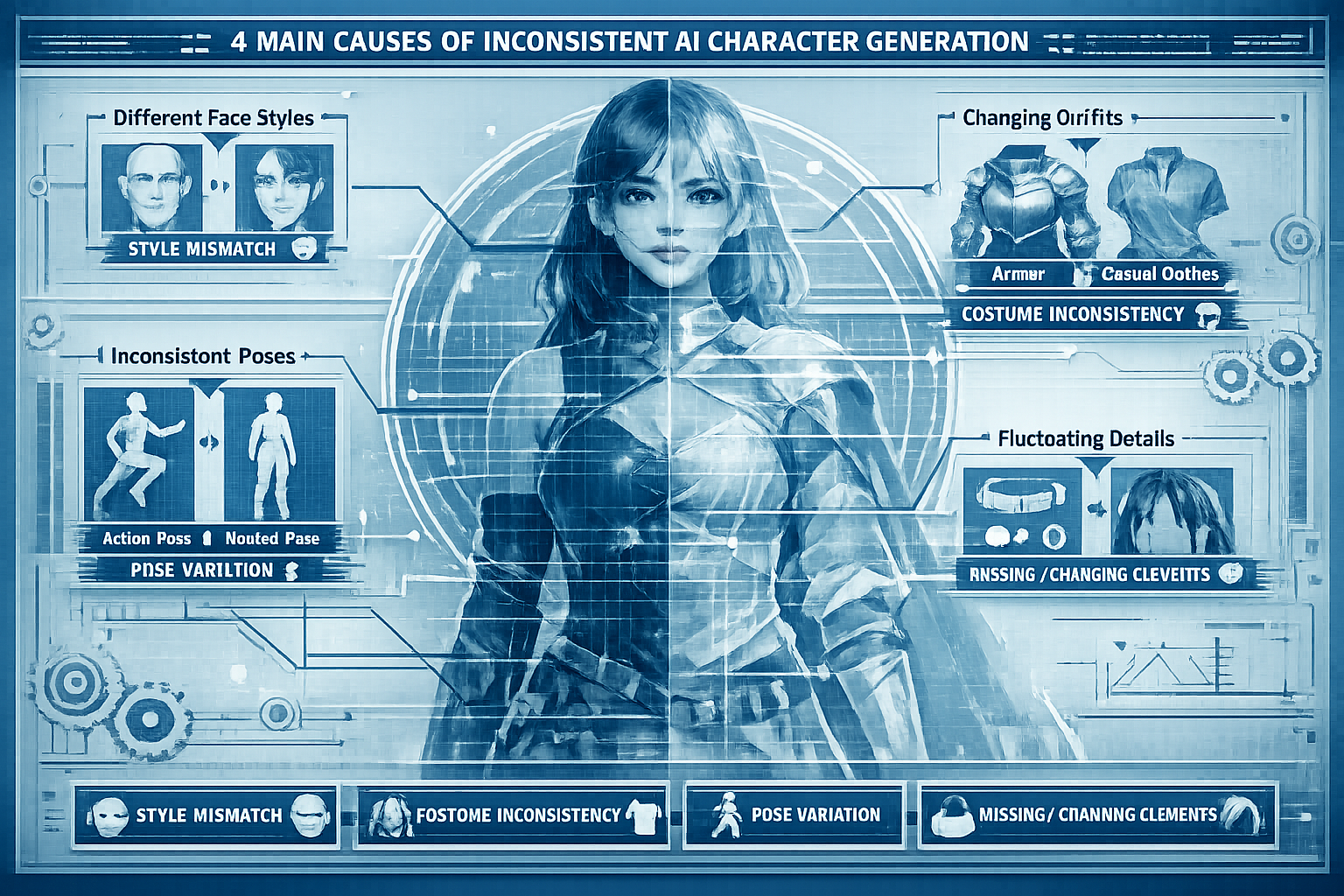
The 4 Main Causes of Inconsistent AI Character Generation
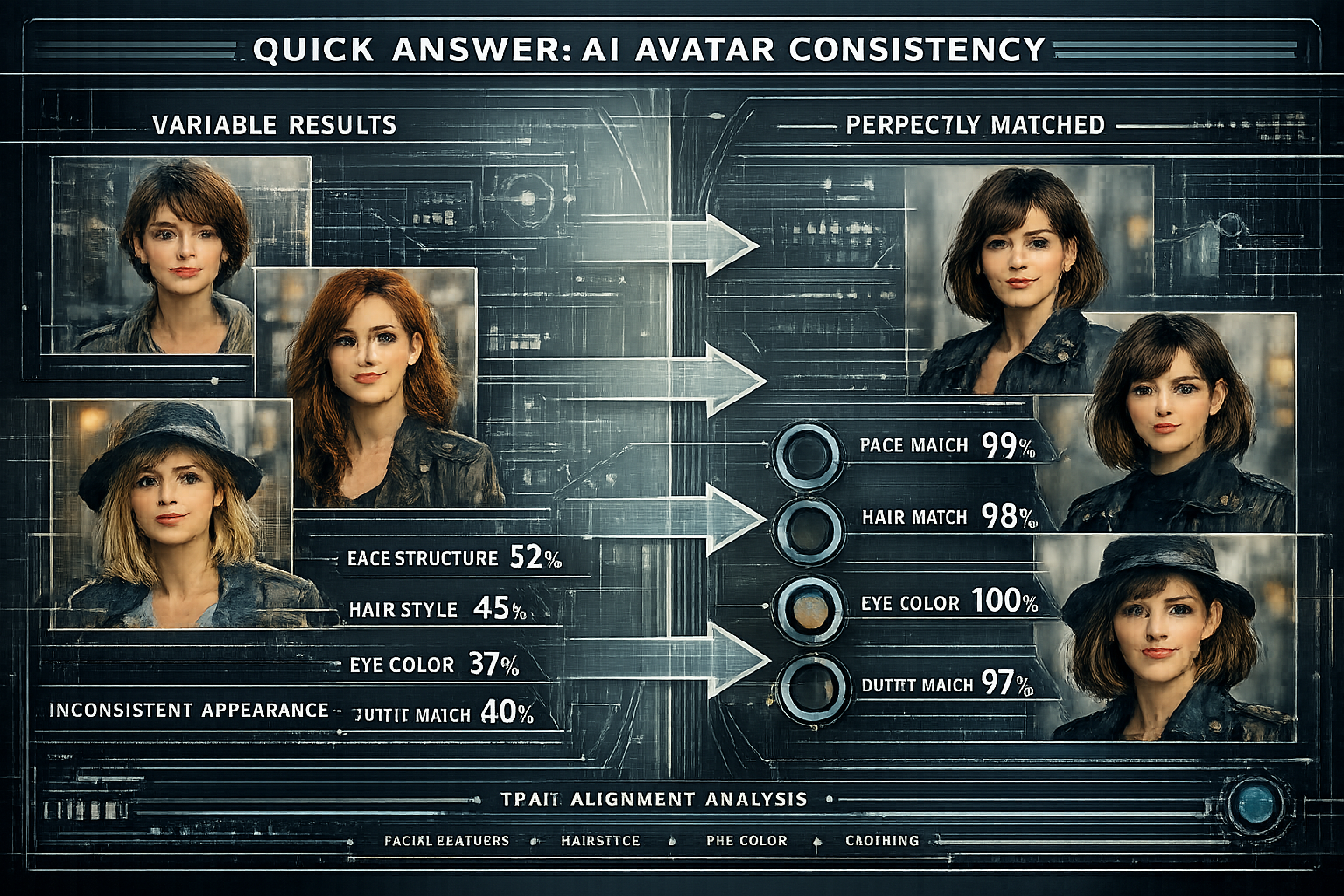
Inconsistent AI avatars result from four technical factors: prompt variations, seed randomness, model limitations, and reference drift. Understanding these causes allows you to systematically address each one in your workflow.
Cause #1: Prompt Variations and Keyword Drift
The biggest consistency killer is changing your character description between generations, even slightly. AI models interpret “blonde girl” differently from “blonde woman” or “girl with blonde hair.” These seemingly minor word changes trigger completely different facial feature generation.
Common prompt drift mistakes:
• Using synonyms for the same features (“green eyes” vs “emerald eyes”)
• Adding or removing descriptive words (“tall girl” becomes just “girl”)
• Changing the order of character traits in your prompt
• Using different clothing descriptions instead of signature outfits
The solution: Create a master character description and use it identically in every single prompt. Professional creators maintain a document with their exact character phrases and copy-paste them to ensure zero variation.
Cause #2: Seed Randomness and Generation Parameters
AI models use random seeds to create variation in outputs. While this randomness creates diverse content, it also changes facial features, proportions, and expressions unpredictably. Most creators ignore seed management entirely, leading to wildly inconsistent results.
Technical factors that affect consistency:
• Random seed generation creates different facial structures
• CFG scale settings influence how closely the AI follows your prompt
• Sampling methods change how features are interpreted
• Step counts affect detail rendering and feature accuracy
The solution: Use fixed seeds for your character’s base appearance, then vary only the action/scene elements of your prompts. Save successful generation parameters and reuse them.
Cause #3: Model Limitations and Training Bias
Different AI models excel at different types of consistency. Some handle facial features well but struggle with body proportions. Others maintain clothing consistency but change facial expressions unpredictably.
Model-specific consistency challenges:
• Face shape drift across multiple generations
• Hair color and style variations within the same session
• Body proportion changes between poses
• Clothing detail inconsistencies
• Art style shifts that change the overall character aesthetic
The solution: Test multiple models with your character concept and identify which one handles your specific avatar design most consistently. Don’t assume all AI tools will work equally well for your character type.
Cause #4: Reference Drift and Memory Loss
AI models don’t “remember” previous generations unless you provide reference images. Each new generation starts fresh, leading to gradual character drift over time. Even small changes accumulate into completely different-looking avatars.
Reference drift patterns:
• Facial features slowly change over multiple generations
• Character age appears to shift between images
• Signature clothing elements disappear or change
• Overall character personality and style evolves unintentionally
The solution: Use reference image workflows that provide visual anchors for every generation. Maintain a library of your best character images to use as consistency references.
Understanding these four causes allows you to build systematic solutions rather than hoping for lucky generations. The creators who successfully learn how to make AI avatar look the same address each cause with specific techniques and tools.
The Consistency System: Prompt Engineering + Reference Workflows
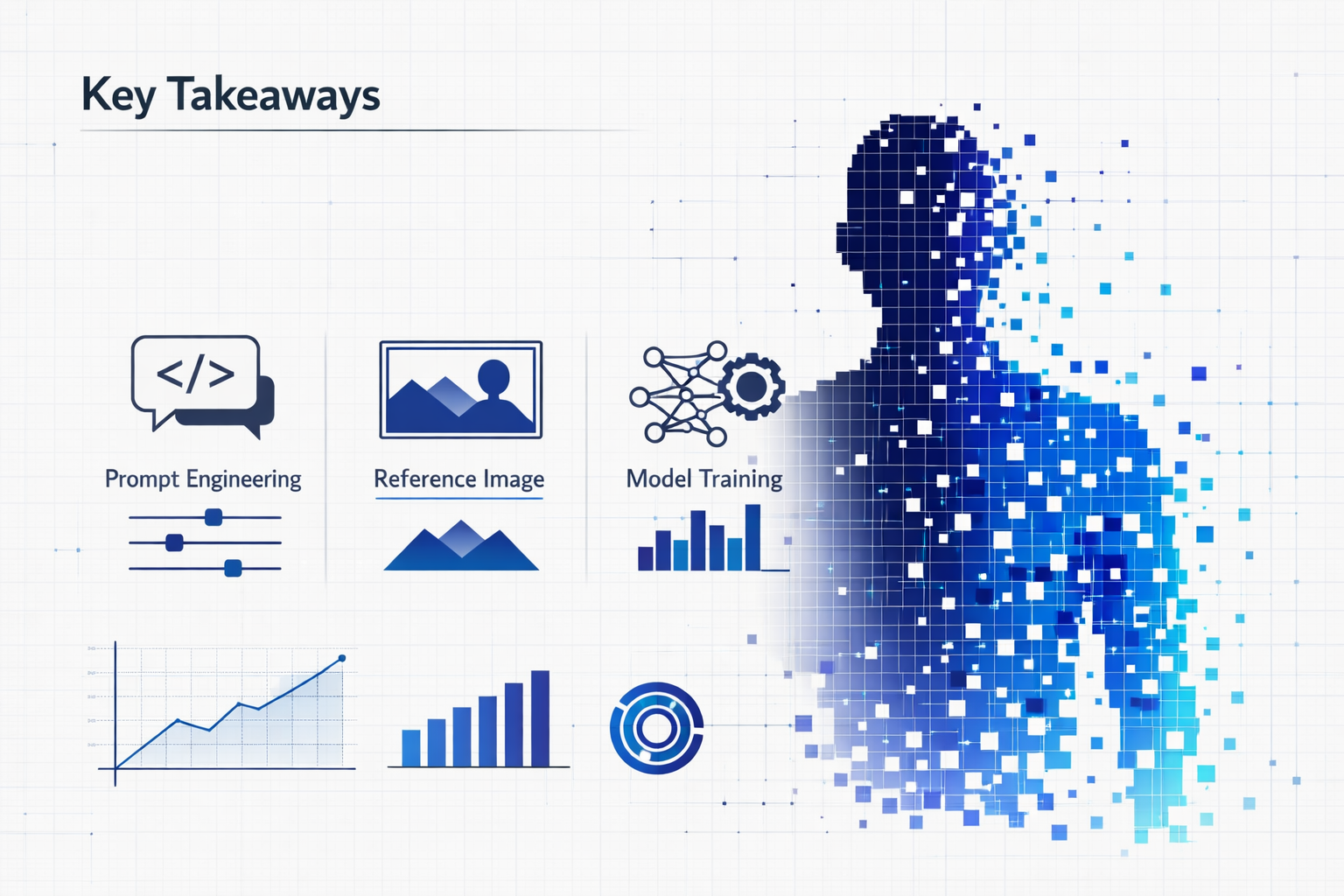
The most effective consistency system combines detailed prompt engineering with reference image workflows, creating a two-layer approach that locks in both textual and visual character elements. This system works across all major AI platforms and scales from single avatars to multiple character management.
Layer 1: Master Character Description Framework
Your master character description serves as the DNA for every generation. This isn’t a casual description — it’s a technical specification that must remain identical across all prompts.
Essential character elements to define:
Physical Features:
• Face shape (oval, round, square, heart-shaped)
• Eye color and shape (blue eyes, almond-shaped)
• Hair color, length, and style (shoulder-length brown hair, wavy)
• Skin tone (fair, olive, dark, specific undertones)
• Age range (early 20s, mid-30s)
• Body type and height (petite, tall, athletic build)
Signature Style:
• Primary outfit or clothing style (blue denim jacket, white t-shirt)
• Accessories that appear consistently (silver necklace, black-rimmed glasses)
• Color palette that defines the character (earth tones, bright colors)
• Overall aesthetic (casual, professional, bohemian, minimalist)
Art Style Specifications:
• Rendering style (photorealistic, illustration, cartoon)
• Lighting preferences (soft natural light, dramatic shadows)
• Color saturation levels (vibrant, muted, high contrast)
• Background style that complements the character
Example master description:
“Sarah, early 20s woman with oval face, bright blue eyes, shoulder-length wavy blonde hair, fair skin, wearing blue denim jacket over white t-shirt, silver chain necklace, friendly smile, photorealistic style, soft natural lighting”
Layer 2: Reference Image Library System
Reference images provide visual anchors that prevent character drift. The most effective approach uses 3-5 high-quality reference images showing different angles and expressions of the same character.
Reference image requirements:
• Primary reference: Front-facing, neutral expression, clear facial features
• Profile reference: Side view showing face shape and hair silhouette
• Expression reference: Showing the character’s signature smile or expression
• Style reference: Full-body shot showing clothing and proportions
• Context reference: Character in a typical environment or pose
Reference workflow steps:
-
Generate 20-30 initial character images using your master description
-
Select the 3-5 most consistent and appealing results
-
Use these as reference images for all future generations
-
Test reference effectiveness by generating 10 new images
-
Replace references if consistency drops below 80% similarity
Advanced Prompt Engineering Techniques
Prompt structure that maximizes consistency:
[Master Character Description] + [Action/Pose] + [Environment] + [Style Modifiers]
Example implementation:
“Sarah, early 20s woman with oval face, bright blue eyes, shoulder-length wavy blonde hair, fair skin, wearing blue denim jacket over white t-shirt, silver chain necklace, sitting at a coffee shop, looking at laptop screen, photorealistic style, soft natural lighting”
Consistency-boosting prompt modifiers:
• “Same person as reference image”
• “Maintaining exact facial features”
• “Identical character design”
• “Consistent art style”
• “Same lighting and color palette”
Quality Control and Testing Process
Consistency testing protocol:
-
Generate 15 images using your system
-
Rate facial similarity on a 1-10 scale
-
Identify which elements drift most (hair, face shape, clothing)
-
Adjust master description or references to address weak points
-
Re-test until achieving 8+ consistency rating
Red flags that indicate system breakdown:
• Face shape changes between generations
• Hair color or length varies significantly
• Signature clothing disappears or changes
• Age appears different across images
• Overall character personality shifts
The creators featured in Michelle Williams’ AI Influencers Cash program use variations of this exact system, adapted for their specific character types and target audiences. The key is treating consistency as a technical process rather than hoping for lucky generations.
This systematic approach typically achieves 85-95% visual consistency, which is sufficient for building recognizable AI influencer brands and securing brand partnerships.
Best AI Tools for Consistent Character Creation in 2026 (Compared)
Nano Banana Pro currently leads the market for consistent character generation, followed by Ideogram Character and Higgsfield, each offering different strengths for specific use cases. The landscape includes at least 8 dedicated consistency tools, with 4 offering meaningful free tiers for testing.
Tier 1: Professional-Grade Consistency Tools
Nano Banana Pro (Google Gemini)
• Consistency Rating: 9/10
• Best For: Photorealistic avatars with detailed facial control
• Pricing: $20/month for unlimited generations
• Key Strength: Requires highly detailed prompts but delivers exceptional facial consistency
• Workflow: Prompt-based with advanced parameter control
• Learning Curve: Steep — requires mastering detailed character descriptions
Pros: Industry-leading facial consistency, handles complex character details, integrates with Google ecosystem
Cons: Expensive, requires technical prompt expertise, limited free tier
Ideogram Character
• Consistency Rating: 8.5/10
• Best For: Photo-based avatar creation from real people
• Pricing: $16/month, robust free tier
• Key Strength: Upload real photos and generate consistent AI versions
• Workflow: Reference image-based with simple prompt overlay
• Learning Curve: Moderate — intuitive interface with photo upload
Pros: Excellent for personalizing real people, strong free tier, user-friendly interface
Cons: Less control over fictional character creation, photo quality affects results
Higgsfield Sole ID
• Consistency Rating: 8/10
• Best For: Multi-angle character training and pose variation
• Pricing: $25/month, limited free testing
• Key Strength: Train characters from multiple reference angles
• Workflow: Training-based system with character library management
• Learning Curve: Moderate — requires uploading multiple training images
Pros: Excellent pose and angle variation, character library system, good for content series
Cons: Higher cost, training time required, smaller user community
Tier 2: Solid Consistency with Budget Options
Midjourney Character Reference (–cref)
• Consistency Rating: 7.5/10
• Best For: Artistic and stylized character consistency
• Pricing: $10/month basic, $30/month for commercial use
• Key Strength: Strong artistic style consistency, large user community
• Workflow: Discord-based with character reference parameters
• Learning Curve: Moderate — requires Discord familiarity and parameter knowledge
Leonardo AI Character Training
• Consistency Rating: 7/10
• Best For: Custom model training for specific characters
• Pricing: $12/month, free tier available
• Key Strength: Custom model creation for ultimate control
• Workflow: Training-based with LoRA model creation
• Learning Curve: High — requires understanding of AI training concepts
Tier 3: Entry-Level and Specialized Tools
Artflow Character Builder
• Consistency Rating: 6.5/10
• Best For: Beginners and quick avatar prototyping
• Pricing: Free tier, $15/month pro
• Key Strength: User-friendly interface, good for testing concepts
• Workflow: Template-based character creation
• Learning Curve: Low — drag-and-drop interface
D-ID Creative Reality Studio
• Consistency Rating: 6/10
• Best For: Video avatars and talking head content
• Pricing: $5.99/month basic
• Key Strength: Specializes in animated avatar videos
• Workflow: Photo upload with video generation
• Learning Curve: Low — simple photo-to-video process
Tool Selection Decision Matrix
Choose Nano Banana Pro if:
• Budget allows $20/month
• You need photorealistic quality
• You’re willing to master detailed prompting
• Facial consistency is your top priority
Choose Ideogram Character if:
• You want to create avatars based on real photos
• You prefer user-friendly interfaces
• You need a strong free tier for testing
• You’re creating personalized content
Choose Higgsfield if:
• You need multiple poses and angles
• You’re creating content series or storylines
• You want a character library system
• Training time isn’t a concern
Choose Midjourney if:
• You prefer artistic/stylized avatars
• You’re already familiar with Discord workflows
• You want access to a large creator community
• Budget is a primary concern
Performance Testing Results
Based on community testing from Michelle Williams’ AI Influencers Cash members, here’s how these tools perform across key metrics:
Facial Consistency (same face across 20 generations):
-
Nano Banana Pro: 94% similarity
-
Ideogram Character: 89% similarity
-
Higgsfield: 87% similarity
-
Midjourney: 82% similarity
-
Leonardo AI: 78% similarity
Ease of Use (time to first consistent character):
-
Ideogram Character: 15 minutes
-
Artflow: 20 minutes
-
D-ID: 25 minutes
-
Midjourney: 45 minutes
-
Nano Banana Pro: 90 minutes
Value for Money (consistency per dollar spent):
-
Ideogram Character: Excellent
-
Midjourney: Very Good
-
Leonardo AI: Good
-
Nano Banana Pro: Good
-
Higgsfield: Fair
The most successful AI creators typically start with Ideogram Character or Midjourney to learn consistency principles, then upgrade to Nano Banana Pro when they’re ready to monetize their avatars professionally.
From Avatar to AI Influencer: How to Monetize Your Consistent AI Character
Consistent AI avatars can generate $2,000-$15,000 monthly through brand partnerships, UGC creation, and product promotion once they achieve recognizable status and engaged followings. The monetization pathway follows predictable stages that successful creators navigate systematically.
Stage 1: Foundation Building (Months 1-3)
Goal: Establish character consistency and build initial audience recognition
Key Activities:
• Perfect your avatar consistency system using the techniques above
• Create 50-100 high-quality images showcasing your character
• Develop character personality, backstory, and content themes
• Post consistently across 2-3 social platforms
• Engage with AI creator communities and hashtags
Monetization Potential: $0-$500/month from small brand collaborations and affiliate marketing
Success Metrics:
• 90%+ avatar consistency across all content
• 1,000+ followers on primary platform
• Regular comments from repeat viewers who recognize your character
• 3-5% engagement rate on posts
Stage 2: Audience Development (Months 4-8)
Goal: Scale audience and establish niche authority
Content strategies that work:
• Behind-the-scenes content showing your AI creation process
• Character storylines that develop your avatar’s personality over time
• Trend participation with your consistent character in popular formats
• Educational content about AI tools and techniques
• Collaborations with other AI creators for cross-pollination
Monetization Opportunities:
• Brand partnership inquiries begin around month 4-6
• UGC (User Generated Content) requests for product showcases
• Affiliate marketing with AI tools and related products
• Digital product sales (presets, prompts, tutorials)
Revenue Range: $500-$3,000/month
Michelle Williams notes that creators in her AI Influencers Cash program typically see their first serious brand inquiry between months 4-6, with consistency being the #1 factor that brands evaluate.
Stage 3: Professional Monetization (Months 9+)
Goal: Establish sustainable income streams and scale operations
Advanced monetization strategies:
Brand Partnerships ($500-$5,000 per campaign):
• Fashion and beauty brands seeking AI influencer representation
• Tech companies wanting to showcase products with AI avatars
• Lifestyle brands targeting younger, tech-savvy audiences
• Gaming and entertainment companies using AI characters for promotion
UGC Creation Services ($200-$1,500 per project):
• Product showcase content for e-commerce brands
• Social media content creation for marketing agencies
• Custom avatar creation for other businesses
• Video content featuring your consistent character
Digital Product Sales ($1,000-$8,000/month):
• Character consistency courses and tutorials
• Custom avatar creation services
• Prompt libraries and generation presets
• One-on-one coaching for aspiring AI creators
Subscription and Community Revenue ($500-$3,000/month):
• Patreon or similar platforms for exclusive content
• Discord communities with premium tiers
• Monthly prompt packs and character updates
• Live creation sessions and Q&A access
Case Study: Successful Monetization Timeline
“Luna” – Fashion AI Influencer
• Months 1-3: Perfected consistency system, grew to 5K Instagram followers
• Month 4: First brand partnership with sustainable fashion brand ($800)
• Month 6: Regular UGC work generating $2,500/month
• Month 9: Launched character creation course ($4,200 first month)
• Month 12: Multiple revenue streams totaling $12,000/month
Key success factors:
• Never compromised on character consistency
• Developed clear brand personality and values
• Engaged authentically with audience despite being AI
• Diversified income streams early
• Reinvested earnings into better tools and content quality
Brand Partnership Requirements
What brands look for in AI influencers:
• Visual consistency — Same recognizable character across all content
• Audience engagement — Real comments and interactions, not just follower counts
• Content quality — Professional-level images and captions
• Brand alignment — Character personality that matches brand values
• Reliability — Consistent posting schedule and professional communication
Typical brand partnership rates in 2026:
• Micro-AI-influencers (1K-10K followers): $100-$800 per post
• Mid-tier AI influencers (10K-100K followers): $500-$3,000 per post
• Major AI influencers (100K+ followers): $2,000-$10,000 per post
Legal and Ethical Considerations
Disclosure requirements:
• Always disclose that your content features AI-generated characters
• Follow FTC guidelines for sponsored content and affiliate marketing
• Be transparent about your creation process when asked
• Respect platform policies regarding AI-generated content
Best practices for ethical AI influencing:
• Don’t claim your avatar is a real person
• Be honest about the AI creation process
• Focus on entertainment and inspiration rather than deception
• Support other creators and share knowledge openly
The creators who build sustainable AI influencer businesses treat their avatars like professional brands, investing in consistency, quality, and authentic audience relationships. As Michelle Williams emphasizes in AI Influencers Cash, the technical skills are just the foundation — long-term success requires treating your AI character like a legitimate business venture.
FAQ
Q: Can any AI tool create a consistent avatar?
A: No, not all AI tools are designed for character consistency. General-purpose image generators like DALL-E or basic Stable Diffusion models struggle with maintaining the same face across multiple generations. You need specialized tools like Nano Banana Pro, Ideogram Character, or Higgsfield that include consistency features like reference image support or character training capabilities.
Q: How long does it take to set up a consistent AI character system?
A: Setting up a basic consistency system takes 2-4 hours: 1 hour to write your master character description, 1-2 hours to generate and select reference images, and 1 hour to test your system with 15-20 generations. Mastering the system and achieving 90%+ consistency typically requires 2-3 weeks of regular practice and refinement.
Q: What is AI Influencers Cash and how does it teach consistency?
A: AI Influencers Cash is Michelle Williams’ comprehensive course that teaches creators how to build consistent AI avatars and monetize them as influencers. The program includes step-by-step consistency workflows, tool comparisons, prompt libraries, and business strategies for earning through brand partnerships and UGC creation. It’s specifically designed for creators who want to turn AI avatar creation into a profitable business.
Q: Can AI avatars really earn money from brand deals?
A: Yes, consistent AI avatars can earn $500-$15,000+ monthly through brand partnerships, UGC creation, and affiliate marketing. Brands increasingly work with AI influencers for cost-effectiveness and creative control. However, success requires building genuine audience engagement, maintaining perfect character consistency, and following proper disclosure guidelines for AI-generated content.
Q: What is the difference between an AI avatar and a virtual influencer?
A: AI avatars are individual character designs created by independent creators, while virtual influencers are typically full-scale digital personalities backed by agencies or companies with extensive backstories, professional management, and major brand partnerships. AI avatars can evolve into virtual influencers with sufficient audience and business development.
Q: Do I need artistic skills to create consistent AI avatars?
A: No artistic drawing skills are required, but you need technical skills in prompt engineering, reference image curation, and AI tool management. Success depends more on systematic consistency processes than traditional art abilities. However, having a good eye for visual composition and character design helps create more appealing avatars.
Q: How many reference images should I use for consistency?
A: Use 3-5 high-quality reference images: one front-facing neutral expression, one profile view, one showing your character’s signature expression, one full-body shot, and one contextual image. More than 5 references can confuse some AI tools, while fewer than 3 often provides insufficient consistency control.
Q: Can I use photos of real people as references for my AI avatar?
A: You can use photos of yourself or photos you have explicit permission to use. Never use photos of other people without consent, as this raises ethical and legal concerns. Tools like Ideogram Character are specifically designed for creating AI versions of yourself from your own photos, which is the safest approach.
Q: What happens if my avatar consistency breaks after several months?
A: Character drift over time is common and fixable. Save your original reference images and master character description, then generate a new set of consistency references using your original specifications. Update your prompt library and test the refreshed system. Most consistency breaks result from gradually changing prompts rather than tool limitations.
Q: How do I handle different poses and expressions while maintaining consistency?
A: Keep your master character description identical while only changing the action/expression portion of your prompts. For example: “[Same character description] + laughing and pointing at camera” vs “[Same character description] + sitting thoughtfully with hand on chin.” The character elements stay constant while only the pose and expression change.
Q: Are there copyright issues with AI-generated avatars?
A: AI-generated avatars typically don’t have copyright protection in the same way as human photos, but you own the rights to your specific character design, prompts, and creative direction. Always follow the terms of service for your chosen AI tools, and consider trademarking your character name and brand if you build significant commercial value.
Q: Can I create multiple consistent AI avatars for different niches?
A: Yes, but manage each character as a separate system with its own master description, reference images, and consistency testing. Many successful creators run 2-3 different AI avatars targeting different audiences or content types. However, start with mastering one character before expanding, as each avatar requires significant setup and maintenance time.
Conclusion
Creating consistent AI avatars that look the same across every image isn’t about luck or hoping for good generations — it’s a systematic process that combines detailed character documentation, reference image workflows, and the right tools for your specific needs.
The creators earning thousands monthly from AI influencer content all follow similar consistency principles: they treat their avatars like professional brands, invest time in systematic setup, and never compromise on character recognition. Whether you choose Nano Banana Pro for maximum facial control, Ideogram Character for photo-based creation, or Higgsfield for multi-angle training, success comes from mastering the underlying consistency system rather than relying on any single tool.
Your next steps:
-
Define your character completely — Write a master description covering every visual element before generating any images
-
Choose your consistency tool — Start with Ideogram Character for ease of use or Nano Banana Pro for maximum control
-
Build your reference library — Generate 20+ initial images, select the best 3-5 as references, and test consistency with 15 new generations
-
Document everything — Save your prompts, settings, and references for future use
-
Plan for monetization — Begin building audience and content strategy while perfecting your technical consistency
The difference between creators who build successful AI influencer businesses and those who stay stuck generating random faces comes down to treating consistency as a learnable skill rather than hoping for lucky results.
If you want the complete, step-by-step system for creating consistent AI avatars and monetizing them as an AI influencer or UGC creator, AI Influencers Cash by Michelle Williams walks you through every step — from first avatar to first brand deal.
The AI avatar economy is expanding rapidly in 2026, but only creators who master consistency will build the recognizable brands that audiences connect with and companies want to partner with. Start building your systematic approach today, and you could be earning your first brand partnership within 60-90 days.
SEO Meta Title: How to Make AI Avatar Look the Same – Consistent Character Guide 2026
Meta Description: Learn the exact system to create consistent AI avatars that look identical in every image. Tools, prompts, and monetization strategies for 2026.
Tags: consistent ai avatar, how to make ai avatar look the same, ai character consistency, ai influencer creation, nano banana pro, ideogram character, ai avatar monetization, consistent character generation, ai influencer cash, michelle williams, ai avatar tools, character consistency system