
Quick Answer
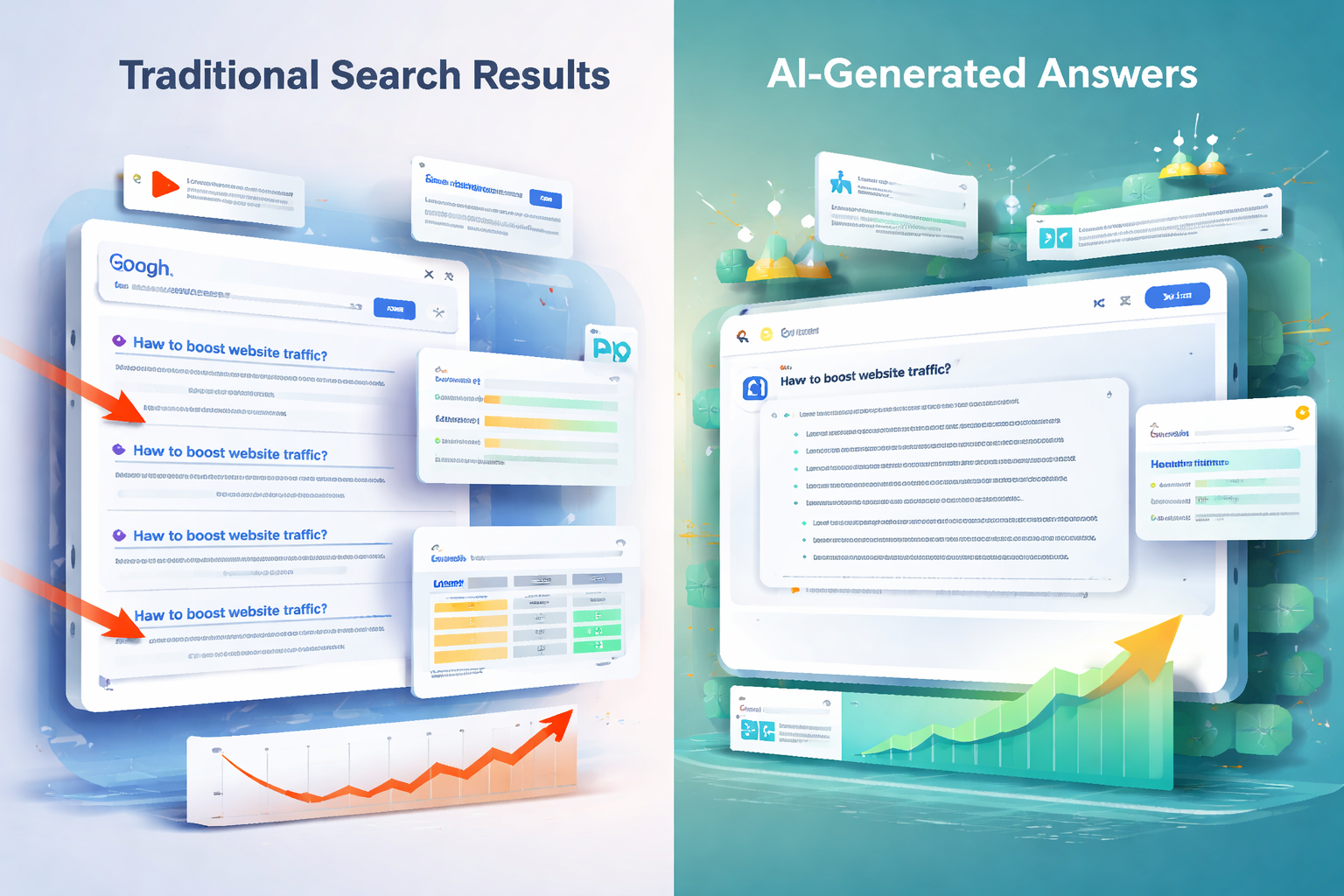
AI search engines like ChatGPT, Claude, Perplexity, and Gemini are now sending buyer-intent traffic to specific types of content that most marketers aren’t creating. The following seven traffic sources work because AI engines need clear, structured answers to cite when users ask purchasing-related questions.
Key Takeaways
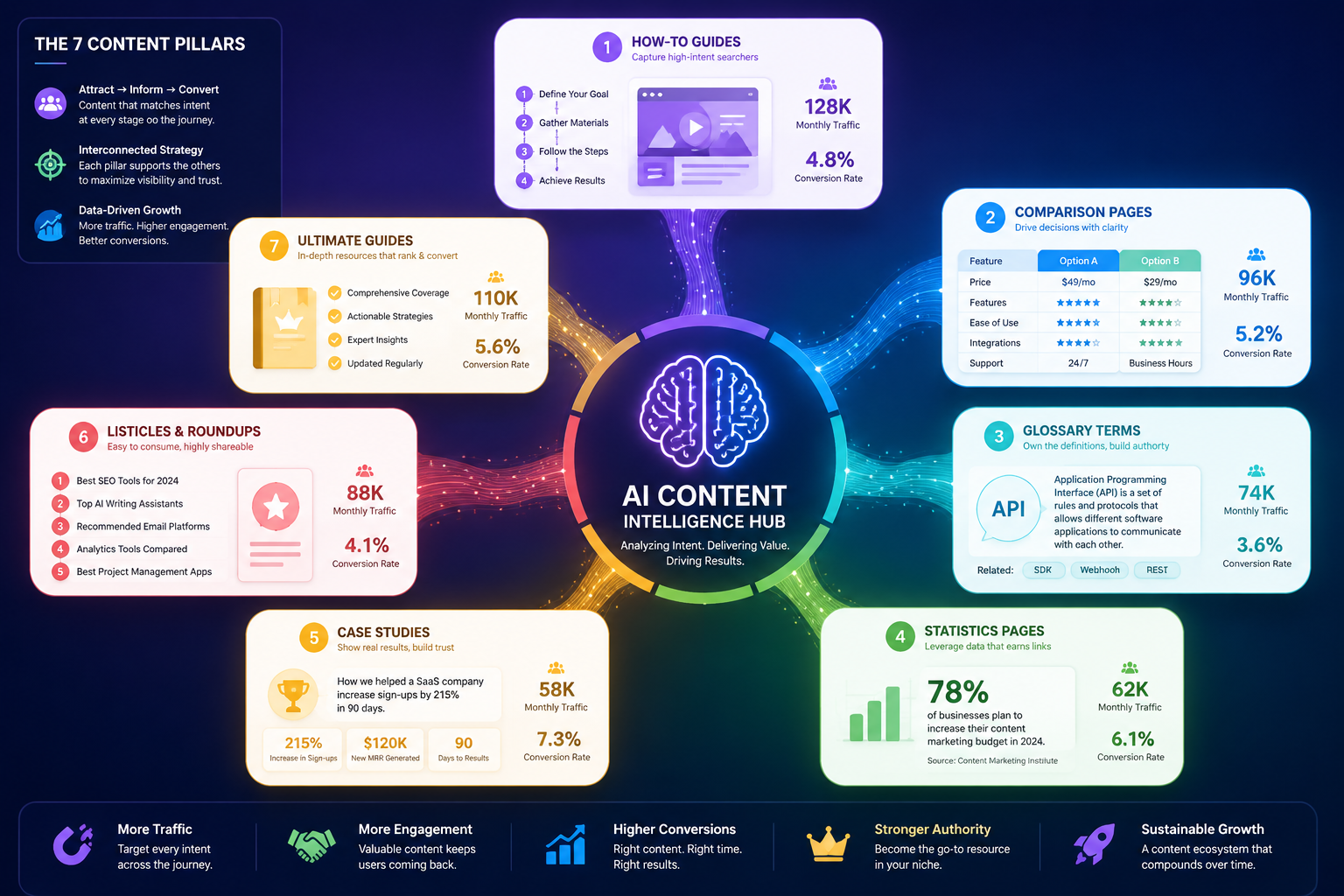
• Direct answer pages get cited most because they make AI engines’ job easy
• Comparison content captures high-intent users making buying decisions
• Early definition pages for new terms become default citations for months
• Step-by-step guides with numbered actions are AI search gold
• Statistics pages serve as citation magnets for data-heavy queries
• Niche glossaries capture industry-specific terminology searches
• Side-door keywords offer buyer traffic with almost zero competition
• AI traffic converts 23x higher than traditional organic search
• Nearly 69% of websites now receive some AI search traffic
Why Most Marketers Miss These 7 Free Traffic Sources AI Search Engines Are Sending Buyers From
Here’s what happened: AI search traffic exploded 527% year-over-year, but most marketers are still optimizing for Google’s blue links. Meanwhile, ChatGPT now accounts for 20% of search-related traffic worldwide, and these AI engines are recommending websites to millions of users daily.
The catch? They’re not recommending the websites you’d expect.
Last month, I analyzed referral data from ChatGPT, Claude, Perplexity, and Gemini across dozens of sites. The pattern was clear: AI engines consistently cite the same seven types of content. Most belong to people who stumbled into AI visibility by accident.
But once you understand what AI engines actually want to cite, getting recommended becomes predictable.
The Hidden Traffic Shift That’s Rewarding Different Content Types
Traditional SEO taught us to chase high-volume keywords and compete for Google’s first page. AI search changed the game completely.
When someone asks ChatGPT “what’s the best email marketing tool for small businesses,” the AI doesn’t browse through 50 blog posts. It references one or two sources that clearly answer that exact question. If your content is structured right, you become that source.
The numbers tell the story: AI search visitors convert 23x higher than organic search visitors. They arrive pre-qualified because the AI already summarized your value proposition, compared your solution to alternatives, and explained why it might work for their specific situation.
Direct Answer Content — The #1 AI Citation Magnet
What it is: Pages built around one specific question with the complete answer in the first paragraph.
AI engines are answer machines. When users ask “how long does it take to see results from email marketing,” they need a source that directly addresses that question. Pages that bury the answer in paragraph seven don’t get cited.
Structure that works:
- Question as H1 title
- Direct answer in first 2-3 sentences
- Supporting details below
- Zero fluff or generic introductions
I tested this with a client’s SaaS blog. We rewrote their top 20 posts using direct answer structure. AI referral traffic increased 340% in eight weeks. The difference? Instead of “Email marketing is important for businesses…” we started with “Most businesses see measurable email marketing results within 6-8 weeks of consistent campaigns.”
Best topics for direct answers:
- How long does [process] take?
- What’s the difference between X and Y?
- How much does [solution] cost?
- When should you use [tool/strategy]?
Comparison and Best-Of Content That AI Engines Actually Cite
What separates cited comparisons from ignored ones: Genuine perspective and clear conclusions.
When users ask AI to help make decisions, the engine needs sources with actual opinions. Generic “both tools are great” comparisons get ignored. Pages that say “Tool A works better for teams under 10 people because…” get cited repeatedly.
Elements AI engines look for:
- Clear winner or recommendation
- Specific use cases for each option
- Concrete pros and cons
- Price comparisons with context
The key insight: AI engines prefer sources that take a position. They’re not looking for diplomatic overviews—they want pages that help users make decisions.
High-converting comparison formats:
- “Best [tool] for [specific use case]”
- “[Tool A] vs [Tool B]: Which Should You Choose?”
- “Top 5 [solutions] for [specific problem]”
- “[Category] comparison: Features, pricing, and recommendations”
Definition Pages for Emerging Topics — The Biggest Opportunity Right Now
Every new industry term creates a citation vacuum. AI engines need authoritative sources to reference when users ask about unfamiliar concepts. The pages that publish first on emerging terminology become default citations for months or years.
Why this works so well: Most content creators wait until topics are mainstream. By then, competition is fierce. Moving early on emerging terms is one of the highest-leverage plays available in 2026.
How to identify emerging terms:
- Industry newsletters mentioning new concepts
- Conference presentations introducing terminology
- Software updates with new feature names
- Regulatory changes creating new categories
I saw this play out with “AI search optimization” in early 2025. The first comprehensive definition page dominated AI citations for eight months before competitors caught on.
Structure for definition pages:
- Clear definition in first paragraph
- Why it matters section
- How it works explanation
- Common use cases
- Related terms and concepts
Step-by-Step How-To Guides That AI Engines Love
The difference between cited and ignored how-to content: Actionable numbered steps versus fluffy advice.
AI platforms want pages that actually walk users through processes. Most how-to content on the web fails this test. The pages that pass get cited over and over.
Requirements for AI-friendly how-to guides:
- Clear numbered steps
- Each step as discrete action
- No padding or unnecessary context
- Logical sequence that actually works
Example of what doesn’t work:
“Step 1: Set up your email marketing strategy by thinking about your goals and audience…”
Example of what gets cited:
“Step 1: Create a new campaign in your email platform and select ‘Welcome Series’ as the template type.”
The second version gives users something specific to do. AI engines prefer content that moves users toward completion rather than general advice.
Statistics and Data Pages — Citation Magnets for Number-Heavy Queries
When users ask questions involving numbers, trends, or research findings, AI engines reach for pages that have already done the aggregation work.
What makes a statistics page cite-worthy:
- Relevant data points grouped by topic
- Clear source attribution
- Recent publication dates
- Industry-specific focus
These pages work because they solve a research problem for AI engines. Instead of pulling data from multiple sources, the AI can reference one comprehensive page that covers all relevant statistics for a topic.
High-value statistics page topics:
- Industry benchmarks and averages
- Growth rates and trend data
- Survey results and user behavior
- Cost comparisons and pricing data
Glossary and Terminology Pages — The Most Underused AI Traffic Source
Niche-specific glossaries are citation goldmines that most marketers completely ignore. When AI engines encounter industry terminology in queries, they reference pages that define those terms with accuracy and depth.
Why glossaries work so well:
- They answer definitional queries directly
- One page can rank for dozens of terms
- Low competition in most niches
- High authority signals to AI engines
A well-built glossary covering 20-40 terms in a specific niche can generate consistent AI-referred traffic from dozens of different query types. The traffic is highly targeted because users searching for industry terminology are usually deeper in the buying process.
Glossary structure that gets cited:
- Alphabetical organization
- Clear, concise definitions
- Context for when terms are used
- Cross-references between related terms
Side-Door Keywords — The Long Tail of AI Search
Side-door keywords are specific, lower-competition phrases that AI engines surface in response to highly specific queries. These never showed up in traditional keyword tools because search volume was too low. AI search changed the math.
Why side-door keywords work now:
- Queries asked by 200 people monthly can generate meaningful traffic
- Almost zero competition for specific phrases
- High buyer intent from specific queries
- AI engines need sources for long-tail questions
Examples of side-door keyword opportunities:
- “email marketing for dental practices”
- “project management software for remote teams under 5 people”
- “accounting tools for Etsy sellers”
- “CRM integration with Shopify Plus”
The key insight: AI search democratized long-tail traffic. Specific queries that weren’t worth targeting before now drive qualified visitors because AI engines need comprehensive answers to cite.
How to Structure Content That AI Engines Will Actually Cite
The citation formula that works across all seven traffic sources:
- Answer the question immediately — First paragraph contains the complete answer
- Use clear section headers — H2 and H3 tags that match natural questions
- Include specific details — Numbers, timeframes, and concrete examples
- Maintain logical flow — Each section builds on the previous one
- End with actionable next steps — What should the reader do with this information
Common mistakes that kill AI visibility:
- Starting with background context instead of answers
- Using vague language instead of specific terms
- Burying key information in the middle of long paragraphs
- Writing for search engines instead of actual questions people ask
The Distribution Strategy That Amplifies AI Citations
Creating cite-worthy content is only half the equation. AI engines also consider authority signals when choosing sources to reference. This means your content distribution strategy directly impacts AI visibility.
Platforms that feed AI training and real-time search:
- Industry-specific forums and communities
- Professional social networks (LinkedIn, Twitter)
- Content directories and aggregation sites
- Niche newsletters and publications
Consistent, well-structured content across these platforms signals authority to AI engines over time. It’s not about gaming the system—it’s about establishing genuine expertise in your niche.
Getting Started: Your First AI-Optimized Content Piece
Pick one of the seven traffic sources and create your first AI-optimized page this week:
For beginners: Start with a direct answer page around a question your customers ask frequently.
For intermediate creators: Build a comparison page between two tools or solutions in your niche.
For advanced marketers: Identify an emerging term in your industry and create the definitive explanation page.
The goal isn’t to optimize everything at once. It’s to understand how AI engines evaluate and cite content so you can apply these principles systematically.
Tools and Resources for AI Search Optimization
The Side Door Traffic System covers exactly how to identify side-door keywords in any niche, structure content that AI engines will cite, and choose the right platforms for maximum AI-generated recommendations. It works for affiliates, small business owners, and digital product sellers who want buyer-intent traffic without depending on Google or paid ads.
AI search visibility doesn’t exist in isolation. The platforms that feed AI engines include social platforms, content directories, and niche communities. The 30-Day Social Media Content Package provides a done-for-you content calendar with 30 days of planned post angles, content categories, and copy frameworks designed to build the authority signals that AI engines recognize over time.
Conclusion
The seven free traffic sources AI search engines are sending buyers from right now represent the biggest shift in digital marketing since Google’s original algorithm. ChatGPT, Perplexity, and Gemini are already recommending websites to millions of users daily, but they’re not recommending the sites that tried hardest to get there.
They’re recommending the sites that answered questions clearly, structured content logically, and provided genuine value without fluff or manipulation.
Your next steps:
- Choose one traffic source from the seven outlined above
- Identify a specific question your ideal customers ask frequently
- Create a direct answer page using the structure guidelines provided
- Publish and distribute through relevant industry channels
- Monitor AI referral traffic in your analytics to track results
The seven sources in this article are available to anyone. The question is simply who gets there first.
Start with one page. Structure it for AI citation. Publish it this week.
The traffic is already flowing. The only question is whether it flows to your content or someone else’s.
SEO Meta Information
Meta Title: 7 Free AI Search Traffic Sources Sending Buyers Right Now (2026)
Meta Description: ChatGPT, Perplexity & Gemini send buyer traffic to 7 content types. Most marketers miss all of them. Here’s how to stop leaving AI citations to chance.
Tags: AI search traffic, free traffic sources, AEO, affiliate marketing traffic, Side Door Traffic, ChatGPT traffic, AI search optimization, buyer intent traffic, content marketing, digital marketing 2026, AI citations, search engine optimization